
Back to Routine

Dog Listening Spotlight: The Language of Interactions
As summer slowly begins giving way to autumn, something interesting starts happening.
The holidays come to an end.
The washing finally catches up.
The suitcases disappear back into the loft.
Alarm clocks quietly return.
Schools go back.
Work meetings begin appearing in the diary again.
Almost without noticing, life starts finding its familiar rhythm.
We often describe this as getting back to normal.
But whose normal?
For us, it's simply the end of another summer.
For our dogs, it's another change in the world they've been trying to understand all along.
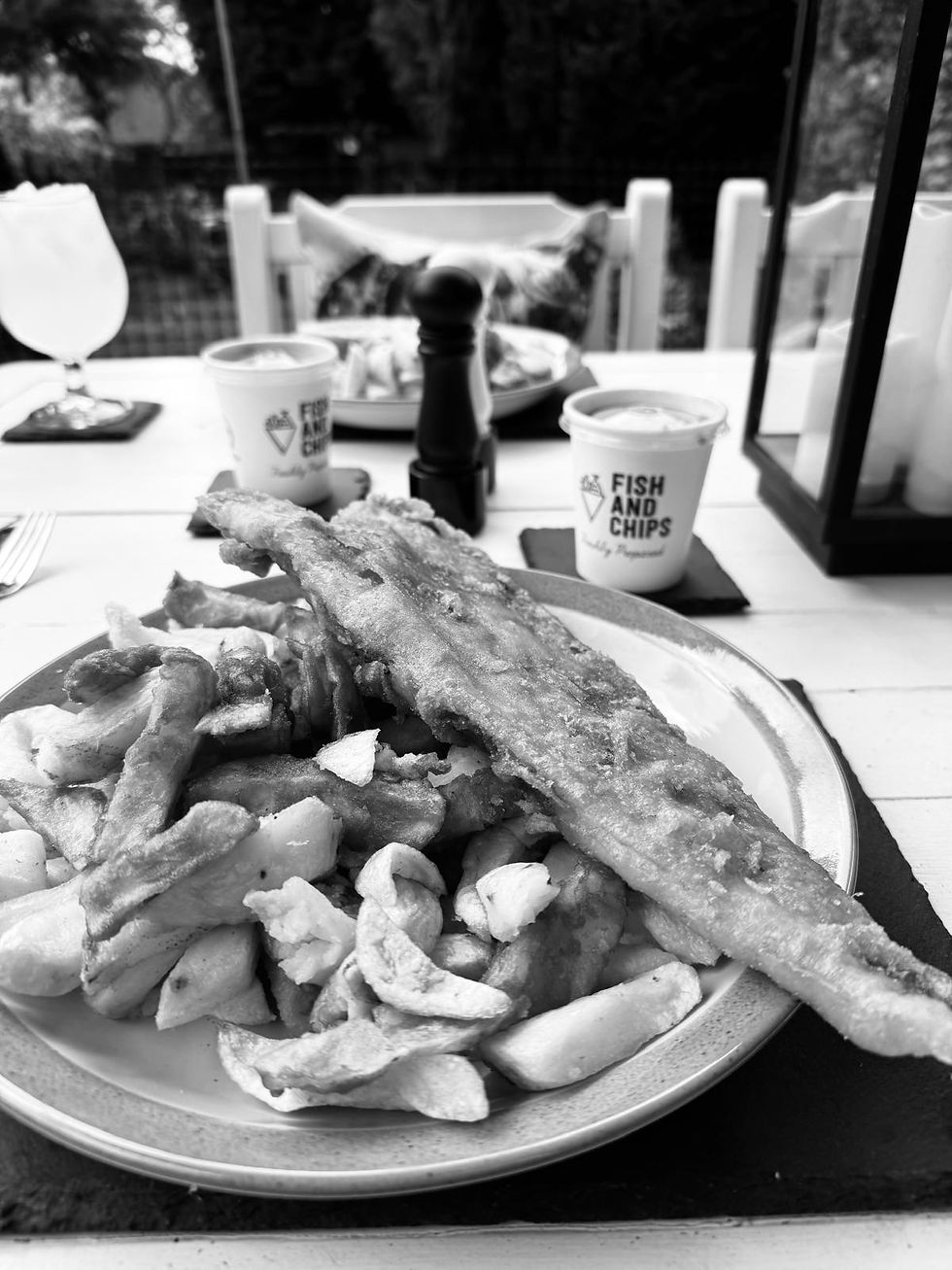
Over the past few months, we've spent time away on holiday, enjoyed a wonderful garden party with friends and family, and, like many people, made the most of the longer evenings. Charlie and Elsie stayed in kennels while we were away and for a little longer afterwards while we welcomed around forty family members and friends into our home.
People sometimes ask whether we miss having the dogs there for occasions like that.
Of course we do.
But that's only one side of the story.
The more interesting question is whether Charlie and Elsie would have enjoyed it.
Years ago, I probably wouldn't have asked myself that question.
I would have been asking how to manage the dogs.
How to stop them jumping up.
How to stop them stealing food.
How to stop them becoming overexcited.
Dog Listening quietly changed that way of thinking.
Instead of asking how to manage the dogs, I found myself asking how we could better manage the environment around them.
Because perhaps the biggest change during summer isn't what our dogs do.
Perhaps it's what we do.
More Than Just Visitors
One of the biggest misconceptions in dog ownership is believing communication only happens when we deliberately communicate with our dogs.
We think communication is giving a cue.
Calling them over.
Praising them.
Correcting them.
In reality, communication never really stops.
Every interaction says something.
Not just the interactions we have with our dogs.
The interactions we have with everyone else.
That's something I don't think we always appreciate.
To us, inviting friends over for a coffee is completely ordinary.
Having family round for fish and chips on a Friday evening feels perfectly normal.
A birthday barbecue.
A few drinks in the garden.
Children visiting.
Unplanned guests popping in.
They're simply the moments that make a house feel like a home.
Our dogs don't experience them in quite the same way.
From their perspective, the world they've carefully learnt suddenly changes.
People appear.
People disappear.
Doors open more often.
The garden becomes busier.
Conversations become louder.
Furniture is used differently.
The humans move differently.
Attention shifts.
Relationships shift.
Nothing has been explained.
They're simply expected to understand.

Watching Relationships
One of the biggest lessons Charlie and Elsie have taught me is that dogs aren't simply watching people.
I think they're watching relationships.
Who's arrived?
Who's leaving?
Who's calm?
Who's excited?
Who's receiving attention?
Who's giving attention?
Who's leading?
Who's following?
Those questions matter far more than we often realise.
Take Charlie and Elsie as an example.
Elsie has always been wonderfully enthusiastic.
When she was younger, she was smaller, endlessly wiggly and had those wonderfully expressive eyes that seemed almost animated. Visitors naturally smiled when they saw her. They crouched down, laughed, opened their arms and, before long, she was right in the middle of the conversation.
Charlie often experienced something different.
Being larger, if he jumped up, people were much more likely to gently guide him back onto four paws or ask him to settle.
Exactly the same behaviour.
Completely different human response.
Nobody was doing anything wrong.
Nobody was choosing favourites.
People were simply responding naturally to two very different dogs.
But I've often found myself asking a different question.
What did that communicate?
Not to me.
Not to our visitors.
To Charlie and Elsie.
Because attention is information.
Affection is information.
Invitations are information.
Dogs don't analyse those moments like we do, but they do notice patterns.
Who seems to have easiest access to people?
Who gets greeted first?
Who gets invited over?
Who becomes the centre of attention?
Those tiny moments gradually become part of the social picture they're building every single day.
The Household Changes Too
This becomes even more interesting in a multi-dog household.
Charlie isn't only watching me.
He's watching Mike.
He's watching Elsie.
He's watching how Mike interacts with Elsie.
Elsie is watching Charlie.
Both dogs are watching how visitors interact with all of us.
The conversations aren't happening one at a time.
They're all happening together.
Then imagine somebody new arrives.
Perhaps they're nervous around dogs.
Perhaps they absolutely adore them.
Perhaps they ignore Charlie and fuss Elsie.
Perhaps they greet Mike before me.
Perhaps they immediately sit in one of our favourite chairs.
From our perspective, they're simply making themselves comfortable.
From a dog's perspective, the relationships within the household have just changed.
Calm Is Contagious
This is one of the reasons we're careful about our own interactions.
When Charlie and Elsie go into kennels, we don't make dramatic speeches.
We don't tell them how much we'll miss them.
We don't turn the goodbye into an emotional event.
Not because we don't care.
Because the interaction itself communicates something.
We're saying:
Everything is normal.
We'll see you later.
Life carries on.
The same applies when we collect them.
Of course we're delighted to see them.
But we don't need to prove it by creating the most exciting reunion imaginable.
Calm communicates too.
Perhaps more clearly than excitement ever could.

Even We Change
Summer changes us in ways we rarely notice.
We become more relaxed.
We spend more time outdoors.
We stay up later.
We sometimes work more flexibly.
We socialise more.
Then September arrives and, almost overnight, we expect life to return to normal.
But our dogs aren't simply adapting to a timetable.
They're adapting to us.
The humans they lived with in August behave differently in September.
The conversations change.
The routines change.
The interactions change.
Even something as simple as eye contact changes.
People often ask about separation anxiety as though it begins when the front door closes.
I don't think it does.
The conversation often begins much earlier.
The laptop comes out.
The work clothes go on.
The keys are picked up.
The pace changes.
The interactions change.
The dog has been listening to that conversation long before anyone says goodbye.
Looking Sideways
Earlier this summer we watched something similar happen with our hens.
When we unexpectedly lost Cloud, nothing dramatic happened overnight.
But over the following days, and weeks ahead, the flock was quietly changing.
Someone became bolder.
Someone became quieter.
Someone slept somewhere different.
Ginger and Nutmeg weren't simply joining a flock.
They were joining an existing social group whose relationships had already shifted.
Watching them reminded me of something.
Social animals don't just notice individuals.
They notice relationships.
Dogs do exactly the same.
Perhaps that's why the Language of Interactions is so important.
It reminds us that communication isn't something we switch on when we ask our dogs to do something.
It's happening all the time.
Every greeting.
Every goodbye.
Every visitor.
Every hug.
Every disagreement.
Every glance across the room.
Every interaction says something.
As summer draws to a close, perhaps the biggest routine worth rediscovering isn't breakfast at seven o'clock or the school run.
Perhaps it's something much simpler.
Calm.
Clear.
Consistent.
Confident.
Because when our own interactions become calmer and more predictable, the conversations our dogs are trying to understand often become much clearer too.
After all, our dogs aren't just watching us.
I think they're quietly watching the relationships between us.
And perhaps that's where understanding really begins.
If your dogs are watching the relationships between you... what do you think they're seeing?
Russ


Comments